ARTICLE

Is Your Child Truly Counting? Simple & Fun Ways to Build Strong Math Foundations at Home

A comprehensive guide for families to support counting skills at home, covering key mathematical skills, practical activities, common challenges, and questions to deepen your child's thinking.

73 Copy of Copy of 070623 ZELLMAN Success Academy Math 009921 JH

We’ve all been there: your child proudly recites, “1, 2, 3, 4, 5, 6, 7, 8, 9, 10!” and you beam with pride. It’s a huge milestone! But did you know there is a big difference between reciting numbers like a song and actually counting?

As we hit the middle of the school year, we want to make sure every child has a rock-solid foundation in “Number Sense.” This is the secret sauce that makes later math—like addition, subtraction, and even money—feel easy instead of frustrating.

The Three “Counting Superpowers”

When we look at how kids count, we are watching for three specific skills:

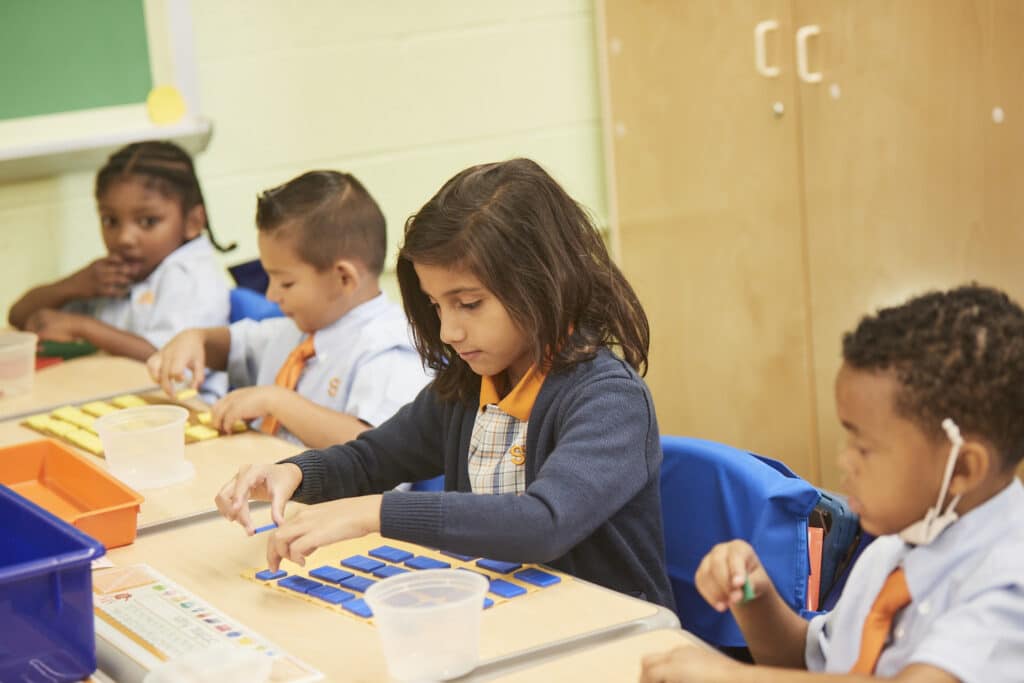
  1. One-to-One Correspondence: Does your child touch exactly one object for every one number they say? (No “skipping” or “double-touching”!)
  2. Cardinality: If they count five beans and you ask, “So how many are there?”, do they know the answer is five? Or do they have to start counting from one all over again?
  3. Organization: Can they move objects into a “counted” pile so they don’t get lost?

Introducing: The Counting Jar Routine

To help you support your child at home, we are releasing our favorite classroom secret: The Counting Jar.

It’s a simple, 10-minute game you can play with anything—buttons, dried beans, Lego bricks, or even cereal. The goal isn’t just to get the right answer; it’s to practice the process of being an accurate mathematician.

How You Can Help (Without Doing the Work for Them!)

Our new Family Guide to Counting includes fun, everyday ways to practice, such as:

  • The “Match It” Game: If your child counts 12 Cheerios for a snack, ask them to find 12 spoons to match.
  • The “Tricky Teens”: Why numbers like 13 and 15 are harder to learn than 21 or 22, and how to help your child master them.
  • Kitchen Math: Turn setting the table or sorting laundry into a “Number Story.”

Why This Matters Now

Math skills build like a tower of blocks. If the bottom blocks (counting) are a little wobbly, the higher blocks (multiplication) will be harder to balance later on. By spending just a few minutes a week on these foundational habits, you are giving your child the confidence to tackle “big kid” math with ease.

Ready to start counting? Click here to download your Family Guide to Supporting Counting at Home!

Sign up for the newsletter

RESOURCES

Explore all our resources for educational leaders, teachers, and parents

Access a wide array of articles, webinars, and more, designed to help you help children reach their potential.